House Clearance Milton Keynes — Recycling and Sustainability
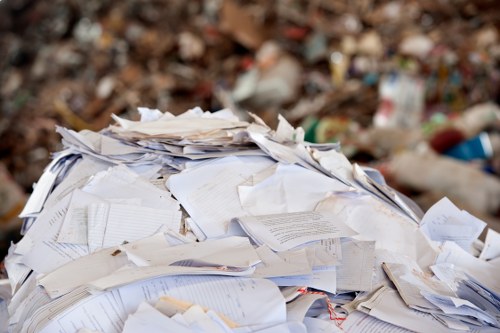 House Clearance Milton Keynes services are evolving to meet the needs of an eco-friendly waste disposal area and a more sustainable rubbish area across the city and surrounding boroughs. Our approach to clearance work prioritises reuse, recycling and low-carbon logistics so that every job contributes to local circular economy goals. We work to reduce landfill, promote repair and donation pathways, and align with the borough's kerbside separation policies for glass, paper, card and compostable food waste.
To make an immediate impact we set a clear recycling percentage target for each clearance: our baseline target is 75% recycling and reuse by weight on standard household clearances, rising to 85% on reuse-focused clearances. These goals are monitored on every project, logged in our sustainability reports and used to prioritise recovery routes such as donation, refurbishment and materials recycling. The targets are ambitious but practical — designed to complement Milton Keynes Council's local ambitions and the wider region's waste separation strategy.
 Local transfer stations and recycling hubs are central to achieving these results. We consolidate sorted materials at council and private transfer stations across MK and neighbouring districts, then route them to appropriate facilities: textiles to reuse centres, metals to local scrap processors, timber to biomass or furniture remanufacturers, and inert rubble to authorised aggregates recyclers. Our logistics planning reduces double-handling and keeps contamination rates low, in line with the boroughs' focus on clean streams and high-quality recyclates.
Partnerships with charities and social enterprises form the heart of our sustainable clearance model. We collaborate with local and national charities, including Age UK Milton Keynes and a network of charity shops and furniture reuse projects, to ensure usable items are repurposed rather than destroyed. Donations of furniture, kitchenware and clothing are collected, sorted and delivered to charity outlets, providing community benefit while diverting material from waste streams.
Our work also supports small repair workshops and social enterprises that specialise in upcycling and refurbishment. These relationships create measurable reuse pathways and jobs locally, and they underpin our reporting against the recycling target. We maintain transparent records for each clearance showing the tonnes diverted to charity, recycled, composted or recovered — giving clients confidence that their clearance contributes to the local circular economy.
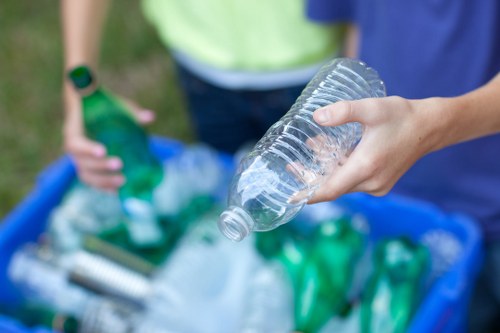 In the heart of Milton Keynes, specific recycling activities are tailored to local systems: kerbside separation for paper and card, separate glass and mixed recycling collections, plus food and garden waste collections in parts of the borough. We design clear-out plans that match these streams so materials arrive at transfer stations already pre-sorted, improving acceptance rates and market value for recyclates. This reduces contamination and ensures more material finds a new life.
Our fleet strategy supports a low-carbon approach to rubbish clearance across MK. We use a mix of electric vans and low-emission vehicles for standard collections, and where larger loads are necessary we run Euro 6 diesel trucks optimised for fuel efficiency. Low-carbon vans reduce local emissions in residential areas and provide quieter, cleaner operations that respect neighbourhoods during clearances. In tightly constrained zones we deploy cargo bikes and micro-electric vehicles for uplift of small, reusable items.
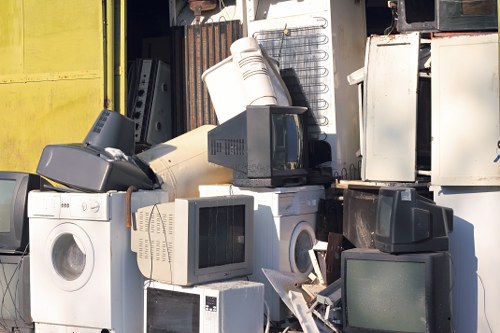 Sustainable practise goes beyond vehicles: on-site waste sorting, protective re-use wrap (recyclable materials instead of single-use plastics), and scheduled consolidation of loads cut overall mileage and emissions. Our crews are trained to identify items with reuse value, safely deconstruct fixtures for salvage, and separate materials at source, which helps exceed the recycling percentage target and preserves value for second-hand markets.
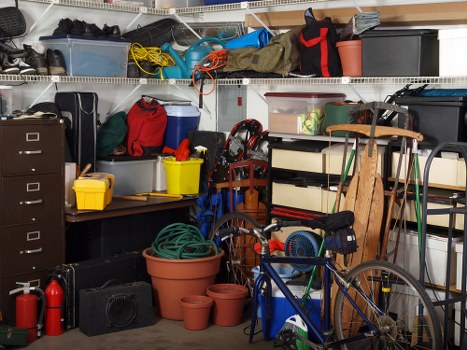
Practical recovery routes and local transfer stations
Where materials go
- Reusable goods: diverted to charity partners and local reuse centres for resale and community benefit.
- Textiles and clothing: sorted for reuse, recycling or energy recovery by specialist processors.
- Metals and appliances: directed to metal recyclers and WEEE facilities for component recovery.
- Wood and timber: reclaimed for repair, remanufacture, or processed into biomass/board where appropriate.
- Inert materials: taken to authorised aggregate recyclers via transfer stations to be reprocessed.
Commitment to continuous improvement
House clearance MK services continue to refine processes, pursue higher reuse rates and invest in zero-emission vehicles as they become available. We publish annual performance figures against our recycling percentage target and work with the borough on shared initiatives to improve household waste separation and bring communities into the circular economy.How we measure success
Success is measured not only by weight diverted from landfill but also by social value created through charity partnerships, the volume of goods refurbished, and the carbon savings achieved through low-carbon vans and consolidated routing. Our sustainable rubbish area approach balances environmental outcomes with social benefit, ensuring every clearance supports a greener Milton Keynes.Milton Keynes house clearance delivered responsibly — reducing waste, supporting charities and moving steadily towards an eco-friendly waste disposal area that serves people and the planet.
